Origin story
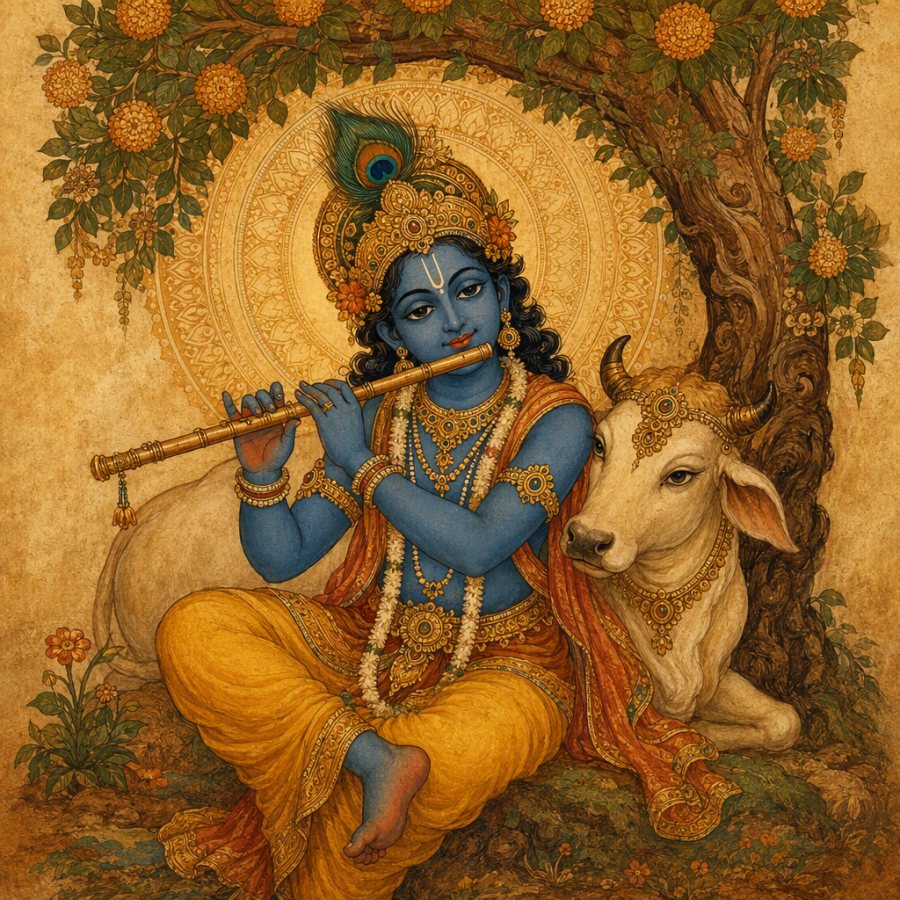
Born to Devaki and Vasudeva in a prison cell and raised by Yashoda and Nanda in Gokul, Krishna grew up as the playful cowherd of Vrindavan. He defeated the tyrant Kamsa, guided the Pandavas to victory at Kurukshetra and spoke the Bhagavad Gita to Arjuna on the battlefield.
The Bhagavata Purana celebrates his childhood as the model of divine play, while the Gita presents him as the teacher of action without attachment. In Kerala, Krishna is worshipped as a child at Guruvayur and Ambalappuzha, where the palpayasam offering recalls his promise to his devotees.
Source: Wikipedia: Krishna — https://en.wikipedia.org/wiki/Krishna
Symbolism
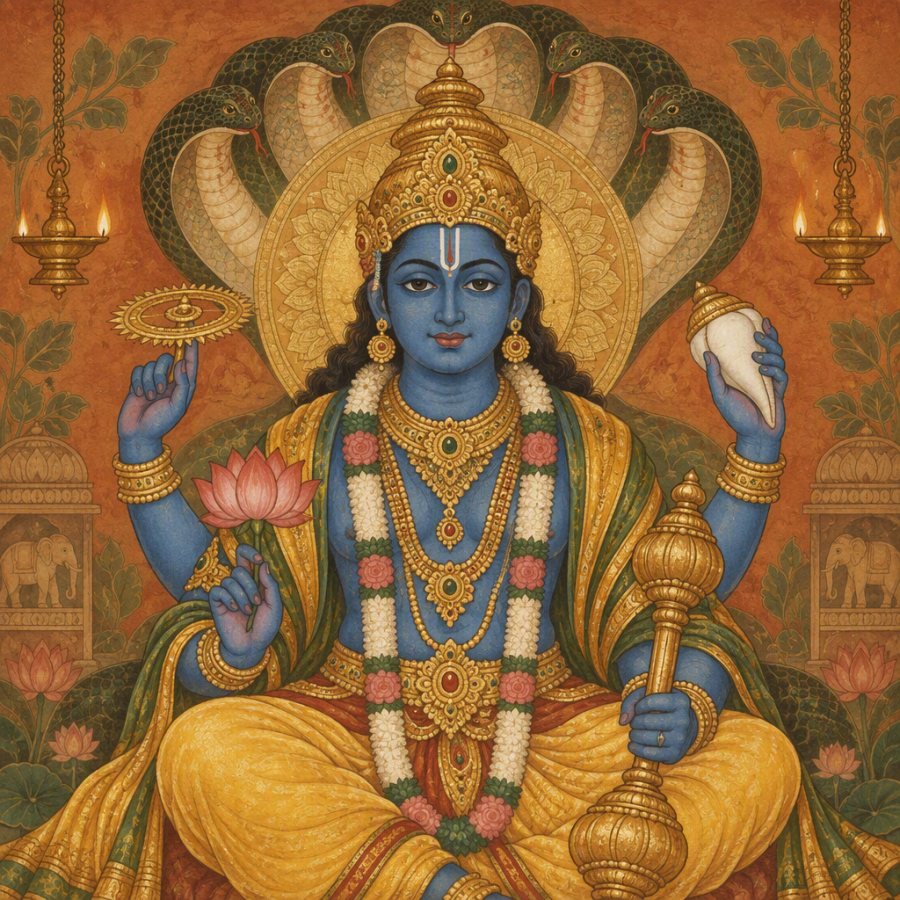
The flute calls the soul home, the peacock feather marks divine play, and the discus protects dharma.
Mantra
2
Hare Krishna Maha Mantra
हरे कृष्ण हरे कृष्ण कृष्ण कृष्ण हरे हरे। हरे राम हरे राम राम राम हरे हरे॥
Hare Kṛṣṇa Hare Kṛṣṇa Kṛṣṇa Kṛṣṇa Hare Hare, Hare Rāma Hare Rāma Rāma Rāma Hare Hare
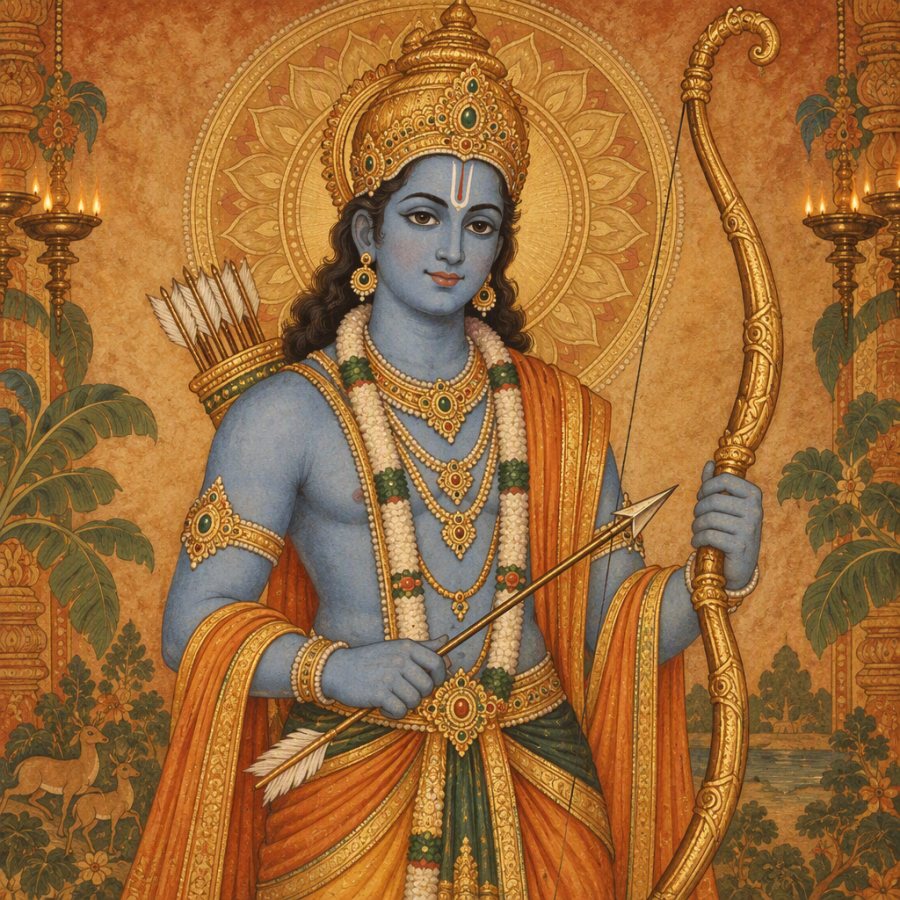
Meaning — A call to the divine energy and to Krishna and Rama, invoking their presence and grace.
Recited for: Kirtan, japa, joy and devotion
Om Namo Bhagavate Vasudevaya
ॐ नमो भगवते वासुदेवाय
Oṃ Namo Bhagavate Vāsudevāya
Meaning — I bow to the blessed Vasudeva, the Lord who dwells in all beings.
Recited for: Japa, surrender, steadiness of mind